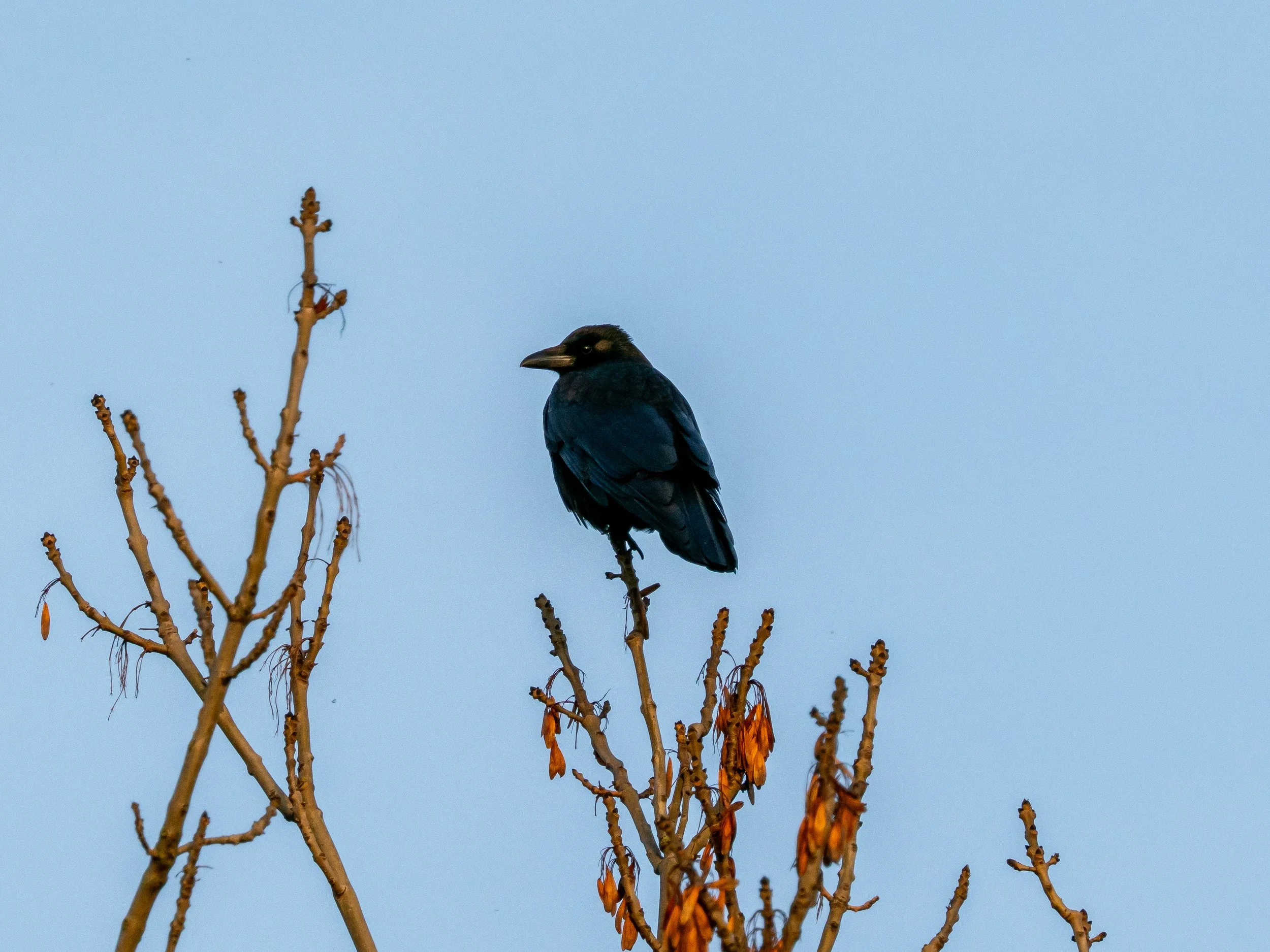
Samhain: Folklore, Traditions & Celebrating the Season
As the last leaves fall from the trees and the evenings draw in we arrive at Samhain, one of the most atmospheric points in the Wheel of the Year. The landscape is changing, the harvest has been gathered and the natural world is preparing for its long winter rest.
Traditionally marking the beginning of winter, Samhain is a festival steeped in folklore, remembrance and mystery. It is a time to honour those who have come before us, reflect on the changing seasons and acknowledge the quieter, darker months ahead.
Often associated with Halloween, ghost stories and all things supernatural, Samhain has a much older history rooted in Gaelic seasonal traditions. It invites us to look beyond the festivities and consider our relationship with nature, memory, death and renewal.
Whether you celebrate Samhain as a spiritual occasion or simply enjoy embracing the folklore and traditions of the season, there is something rather special about this time of year.
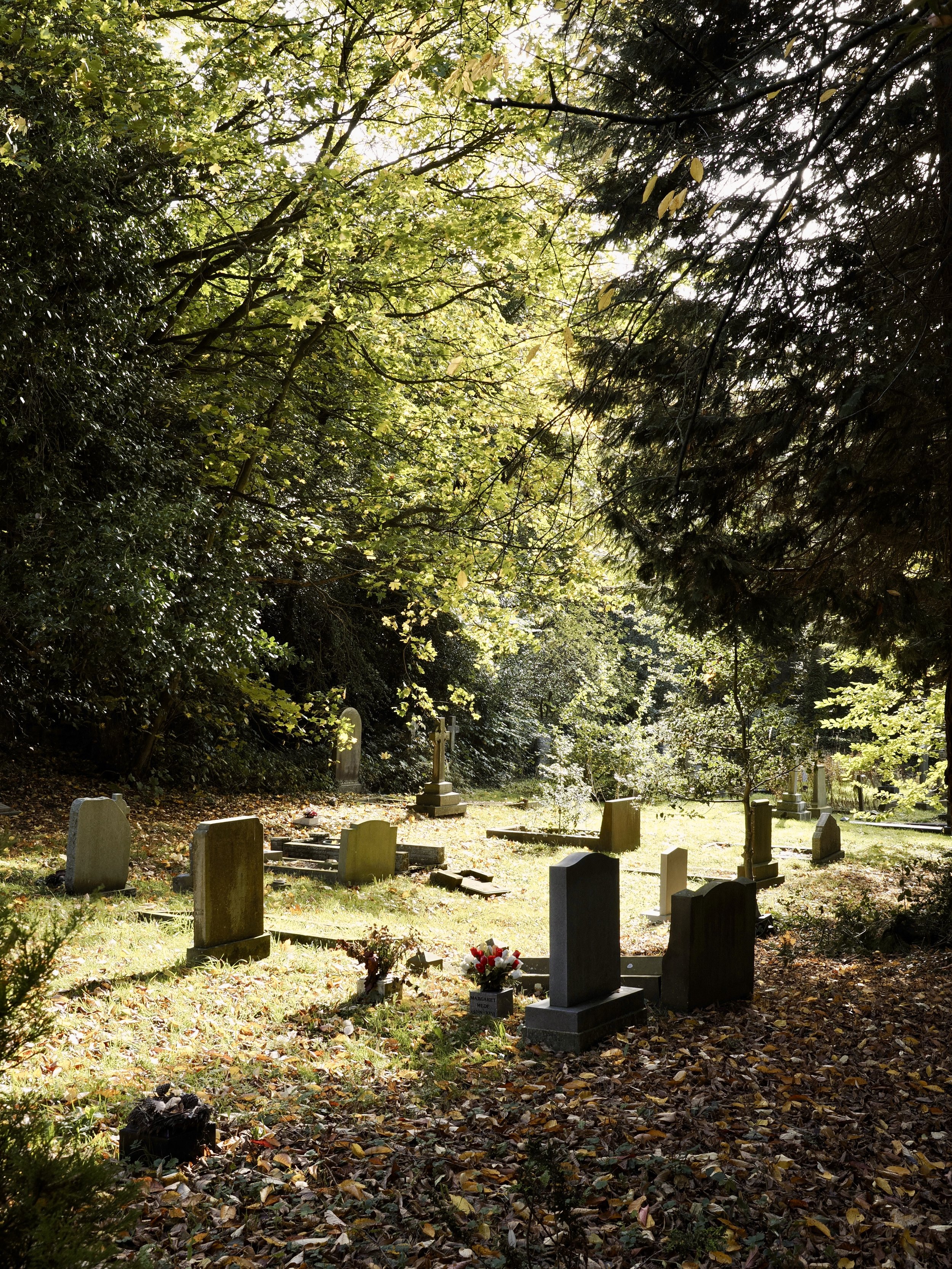
What is Samhain?
Pronounced sow-in, Samhain is a Gaelic festival traditionally marking the end of the harvest and the beginning of winter. Celebrated from the evening of 31 October into 1 November, it was one of the four principal seasonal festivals in the traditional Gaelic calendar, alongside Imbolc, Bealtaine and Lughnasadh.
Samhain marks the transition from the lighter half of the year into the darker half, when the abundance of summer gives way to the stillness of winter. Livestock were brought in from the fields, the harvest was gathered and communities prepared for the colder months ahead.
Within contemporary Pagan and Wiccan traditions, Samhain is often celebrated as the Witches' New Year - marking the end of one cycle and the beginning of another. It is the final festival in the Wheel of the Year and a time for reflection, remembrance and setting intentions for the year ahead. It is also associated with the thinning of the veil between the living and the dead, making it a time for remembering ancestors and loved ones who have passed.
At its heart, Samhain is about transition - endings and beginnings, life and death, light and darkness. It reminds us that change is an inherent part of the natural world, and that even in the apparent stillness of winter, the promise of renewal remains.
Folklore & History
The origins of Samhain
Samhain has its roots in ancient Gaelic Ireland and Scotland, where it marked an important turning point in the agricultural year. Unlike the more familiar celebrations of the modern calendar, the festival was closely connected to the practical rhythms of rural life.
The completion of the harvest meant communities could turn their attention towards winter. Livestock were gathered and, historically, some animals would be slaughtered to provide food for the months ahead. It was also a time for communal gatherings, feasting and storytelling.
Samhain features prominently in early Irish literature and mythology, often providing the setting for encounters with supernatural beings and journeys into the Otherworld.
Although it is sometimes described as the ancient Celtic New Year, the historical evidence for this interpretation is more complicated. What we can say with confidence is that Samhain marked a significant seasonal boundary in early Gaelic tradition.
The thinning of the veil
One of the most enduring associations with Samhain is the belief that the boundary between our world and the Otherworld becomes particularly permeable at this time of year.
In Irish and Scottish folklore, Samhain was associated with supernatural activity - when spirits, fairies and otherworldly beings were thought to roam more freely. The dead were also believed to be able to return to familiar places. This gave the festival an atmosphere of both reverence and apprehension. The returning spirits were not necessarily considered welcome visitors, and various customs developed to protect households from unwelcome supernatural encounters.
In some traditions, food was left outside for wandering spirits, while families might leave a place at the table for deceased loved ones. The idea of welcoming or remembering the dead has continued through many later Halloween and Samhain customs.
Fire, protection & the changing season

Fire played an important role in traditional Samhain celebrations. Bonfires were lit in communities and the flames were associated with protection, purification and the changing of the seasons. In some traditions, household fires were extinguished before being rekindled from a communal bonfire, symbolically marking the beginning of a new seasonal cycle. Fire also offered protection against harmful spirits and supernatural forces believed to be particularly active during Samhain.
The tradition of carving lanterns has similarly fascinating origins. Before pumpkins became synonymous with Halloween, people carved faces into turnips, placing lights inside them to create eerie lanterns. These were sometimes used to frighten away unwanted spirits. It’s a lovely reminder that many of the traditions we now associate with Halloween have much older folkloric roots.
Halloween, All Saints' Day & All Souls' Day
Samhain also has an interesting relationship with the Christian calendar. As Christianity spread throughout the British Isles, the beginning of November became associated with All Saints' Day on 1 November and All Souls' Day on 2 November. The evening before All Saints' Day became known as All Hallows' Eve - eventually shortened to Halloween.
These Christian observances also centred on remembrance of the dead, and over time the customs and traditions surrounding the season became intertwined. Today, Halloween retains many echoes of these older traditions, from carved lanterns and disguises to ghost stories and seasonal feasting.
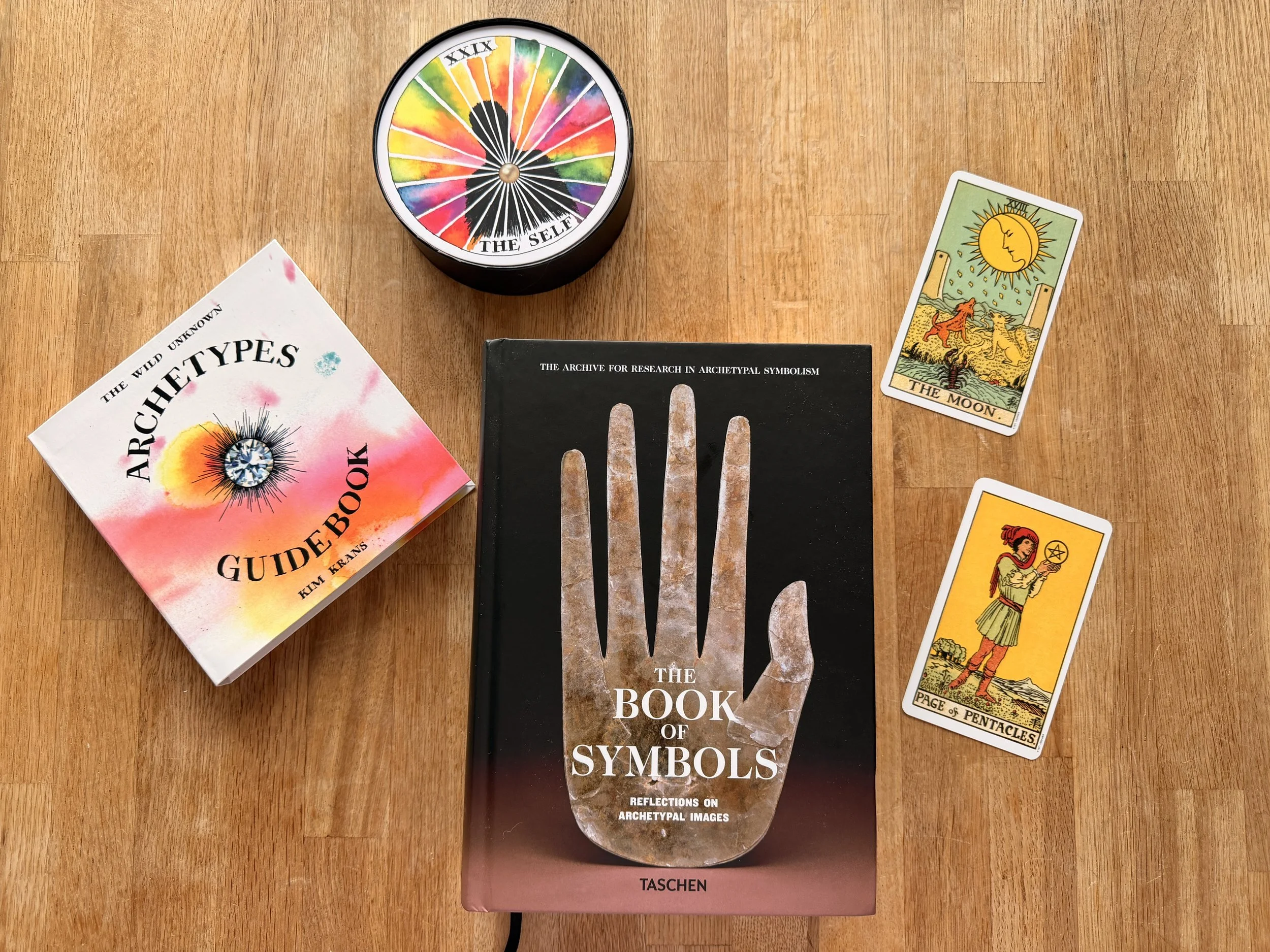
Symbols & Correspondences
Samhain is associated with the colours, plants, fruits and natural materials of late autumn. Its symbolism reflects the final harvest, the arrival of winter and the themes of remembrance and transformation.
Colours
Black – darkness, mystery, protection and the unseen.
Deep red – blood, life, death and transformation.
Orange – the final harvest, autumn leaves and the warmth of fire.
Purple – spirituality, intuition and the Otherworld.
Dark brown – the earth, decay and returning to nature.
Plants & Herbs
Rosemary – remembrance and protection.
Mugwort – traditionally associated with dreams, intuition and divination.
Sage – cleansing and purification.
Yew – death, rebirth and immortality.
Ivy – resilience, continuity and the persistence of life.
Oak – strength, endurance and the turning of the seasons.
Fruits & Foods
Apples – wisdom, knowledge and the Otherworld.
Nuts – abundance, fertility and divination.
Pumpkins and turnips – harvest, protection and traditional lanterns.
Root vegetables – the final harvest and preparation for winter.
Bread and seasonal cakes – nourishment, hospitality and communal feasting.
Symbols
Skulls – mortality and remembrance.
Candles – light in darkness and remembrance of loved ones.
Cauldrons – transformation and the cycles of life.
Bonfires – protection, purification and renewal.
Fallen leaves – endings, release and the natural cycle of decay.
Bats and owls – darkness, mystery and the nocturnal world.
Crystals
Black obsidian – protection, grounding and shadow work.
Smoky quartz – release, transformation and letting go.
Amethyst – intuition, spiritual awareness and dreams.
Labradorite – magic, transformation and the unseen.
Carnelian – courage, vitality and creativity.
Red jasper – grounding, strength and connection to the earth.
Garnet – renewal, passion and the cycles of life and death.
Ways to Celebrate Samhain
Samhain offers plenty of opportunities to slow down, reconnect with nature and embrace the traditions of the season. You don't need elaborate rituals or complicated preparations - even the simplest seasonal gestures can make this time feel meaningful.
Create an ancestor altar
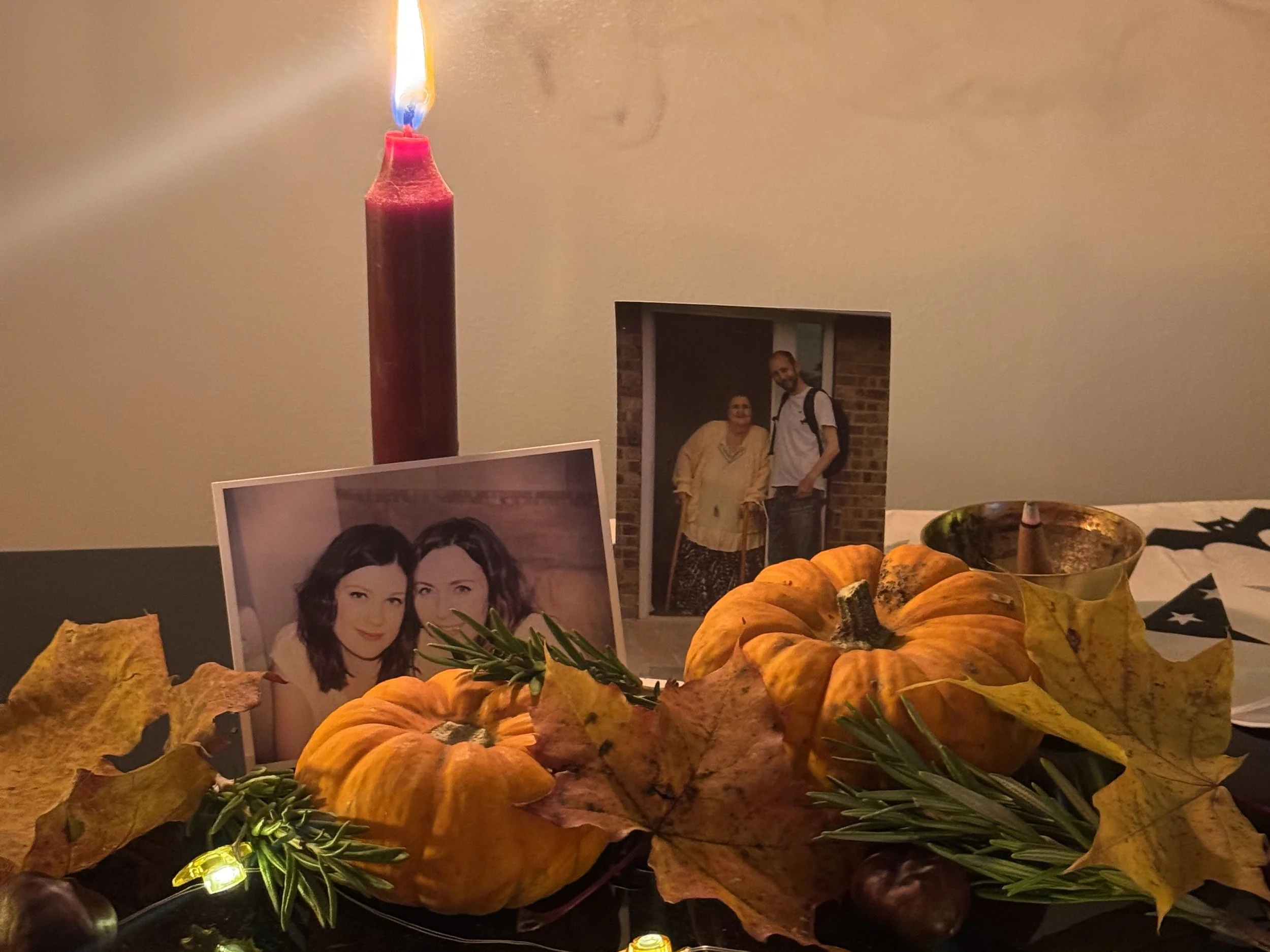
My Samhain Altar from 2025 🖤
One of the most meaningful ways to observe Samhain is to create a small space dedicated to remembering those who have passed. You might include photographs, treasured possessions, candles, flowers or objects that remind you of family members and loved ones. Take a little time to reflect on their lives, the memories you carry and the ways in which they continue to influence you.
Light a candle
As the evenings grow darker, lighting a candle can be a simple but lovely way to mark the season. You could light one in memory of someone you have lost, or simply use the moment to reflect on the year that has passed. There is something comforting about a small flame against the darkness.
Go for an autumnal nature walk
Take a walk through the woods, along a river or through the countryside and notice the changing landscape. Look for fungi emerging from fallen leaves, bare branches, berries, acorns and the last traces of autumn colour. Samhain is a wonderful opportunity to observe the natural world as it prepares for winter. You could collect fallen leaves, seed heads and other natural treasures to use in seasonal decorations, leaving anything living or protected undisturbed.
Make an autumn wreath or flower crown
Gather dried flowers, seed heads, ivy, fallen leaves and seasonal foliage to create a wreath for your home or an autumnal flower crown. Natural materials and muted seasonal colours make beautiful decorations, and this is a lovely way to bring a little of the changing landscape indoors.
Try some traditional divination
Samhain has long been associated with folklore and fortune-telling, particularly customs intended to reveal something about the year ahead.
Traditional Halloween games included apple bobbing, peeling an apple in one continuous strip and throwing the peel over your shoulder to reveal the initial of a future partner, and placing nuts on a fire to divine the future of a relationship.
For a more contemporary approach, you might spend some time with tarot or oracle cards, using the changing season as an opportunity for reflection rather than trying to predict exactly what lies ahead.
Prepare a seasonal feast
Gather friends or family for a comforting meal celebrating the final harvest. Think warming soups, roasted root vegetables, apples, nuts, freshly baked bread and seasonal cakes. In Ireland, traditional Halloween foods included barmbrack, a fruit bread which sometimes contained hidden tokens believed to foretell the future of whoever found them. You could also prepare a little extra food as a symbolic offering in remembrance of those who have passed.
Embrace the folklore
Samhain is the perfect excuse to indulge in a little seasonal storytelling. Read a ghost story, explore local folklore, revisit traditional tales or spend an evening sharing stories with friends. From ancient Irish mythology to the ghostly traditions of the British Isles, there is no shortage of atmospheric reading for the darker evenings.
Go Deeper
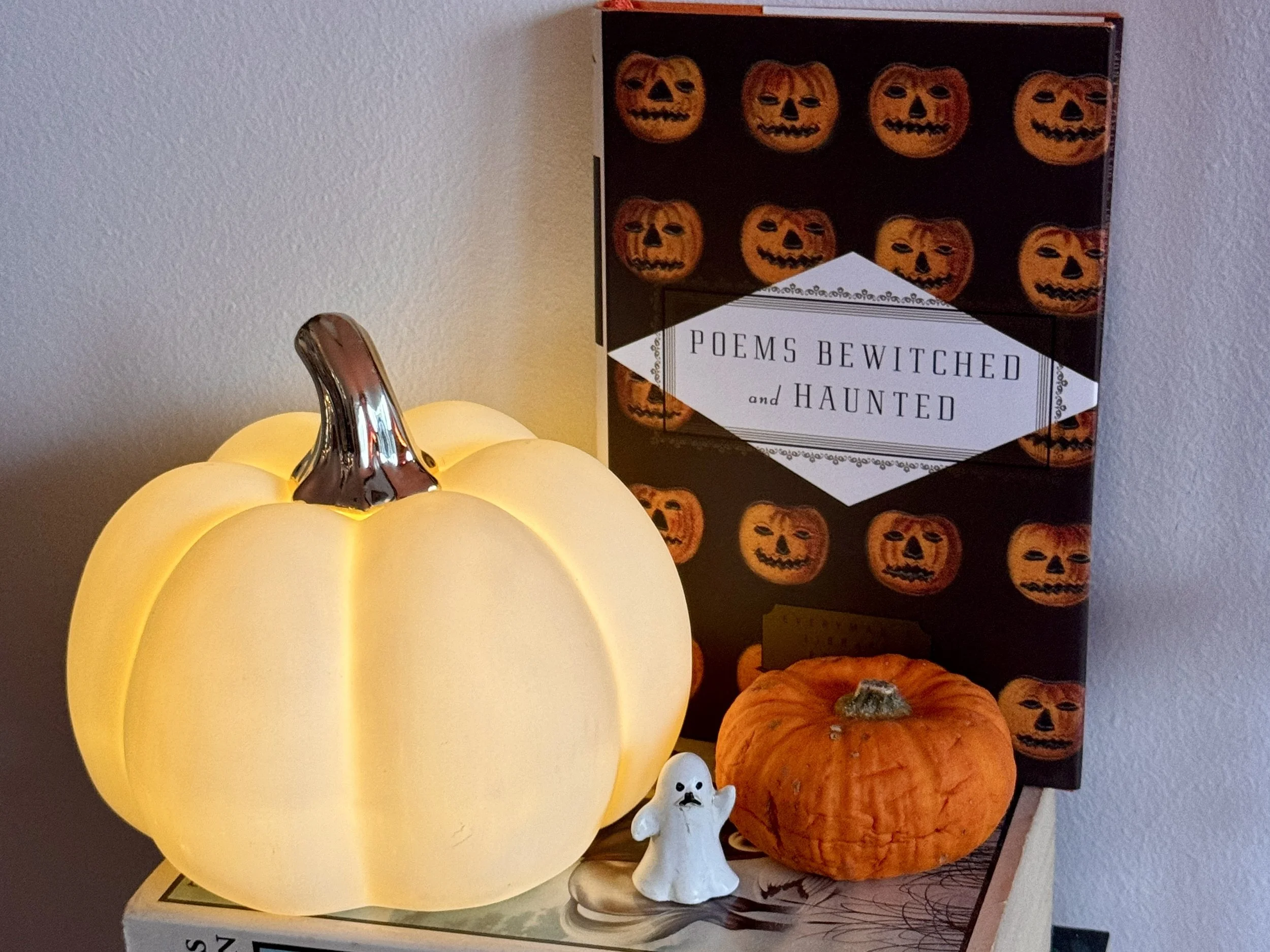
If you'd like to explore Samhain and its folklore a little further, here are some ideas:
Explore Irish folklore and mythology
Look into the stories of the Otherworld, the Aos Sí and the supernatural encounters associated with Samhain. Early Irish tales offer a fascinating glimpse into how people understood the changing seasons and the unseen world.
Discover traditional Halloween customs
Research the history of turnip lanterns, guising, apple divination and traditional Irish Halloween foods. Many familiar Halloween activities have surprisingly rich histories.
Spend time with your own ancestors
Consider researching your family history, looking through old photographs or recording stories passed down through generations. Our personal histories are part of the wider tapestry of remembrance that makes this season so meaningful.
A few questions for your journal
What am I ready to leave behind as the year draws to a close?
Which memories and experiences do I want to carry with me?
What have I learnt about myself over the past year?
How can I make more space for rest and reflection during the darker months?
What does the changing season mean to me?
Read, Watch & Listen
If you're looking for a little inspiration for the darker evenings, here are a few literary, gothic and folkloric recommendations to accompany the season.
Read
The Bloody Chamber – Angela Carter: Dark, sumptuous retellings of traditional fairy tales, filled with folklore, gothic imagery, transformation and female power.
The Turn of the Screw – Henry James: A wonderfully unsettling ghost story set in an isolated country house, where mysterious apparitions and psychological ambiguity create an atmosphere of creeping dread.
We Have Always Lived in the Castle – Shirley Jackson: An eerie and wonderfully strange gothic novel exploring isolation, family secrets, superstition and the darker side of human nature.
Poetry
The Raven – Edgar Allan Poe: A haunting meditation on grief, loss and the supernatural. Perfect for reading by candlelight.
The Stolen Child – W. B. Yeats: Inspired by Irish fairy folklore, this beautiful, eerie poem explores the mysterious world of the fae and the boundary between the human and supernatural worlds.
La Belle Dame sans Merci – John Keats: An enchanting and unsettling ballad of a mysterious fairy woman, a bewitched knight and the dangers of the Otherworld.
Watch
Dracula: A Love Tale (2025): Luc Besson's visually lavish reimagining of the Dracula legend. A dark, gothic love story exploring obsession, loss, immortality and the enduring power of love.
Coraline (2009): Henry Selick's wonderfully eerie stop-motion. A curious young girl discovers a mysterious alternative world behind a hidden door, but its seemingly perfect inhabitants conceal something much darker. A beautifully strange, atmospheric watch for the season - one of my favourites!
The Innocents (1961): A beautifully unsettling adaptation of Henry James's The Turn of the Screw, filled with ghostly apparitions, psychological tension and exquisite gothic atmosphere. I haven’t seen this one yet but it’s on my list to watch after being recommended at a talk all about the gothic that I went to earlier this year.
Listen
Put the kettle on, light a few candles and settle in with my Autumn Playlist on Spotify – a collection of music for misty mornings, golden leaves, darker evenings and everything wonderfully atmospheric about this time of year.
Listen to my Autumn Playlist on Spotify > Autumn Witching Hour
A Closing Reflection
There is something bittersweet about Samhain. It asks us to acknowledge the things that have come to an end, while recognising that endings are not necessarily something to fear. The natural world offers a gentle reminder of this every autumn. Leaves fall, plants retreat beneath the soil and the landscape becomes quieter, but nothing has truly disappeared. Life is simply changing form, gathering its energy for another cycle.
I attended an online talk last year with the brilliant Jessica Hundley, where she shared her beautiful poem Shadow Seed and touched on the symbolism of the pomegranate at this time of year, particularly its connection to the Greek myth of Persephone and her descent into the Underworld. The seeds she consumes bind her to the world below, becoming part of the story that explains the changing seasons. There is something rather beautiful about this imagery - the idea that even in darkness, seeds are being planted for what is yet to come.
Not everything needs to bloom immediately. Some intentions, dreams and ambitions need time to take root beneath the surface, gathering strength until the conditions are right for them to flourish. In this way, endings and beginnings are never quite as separate as they might seem.
This is what makes Samhain such a meaningful point in the Wheel of the Year. It is an invitation to pause, remember those who came before us, release what we no longer need and make peace with the uncertainty of what lies ahead, while gently planting the seeds of what we hope to carry into the future.
As we step into the darker half of the year, may we find comfort in the familiar rituals of the season, warmth in the company of those we love and a little magic in the ordinary moments of everyday life.
Blessed Samhain.