Litha - Summer Solstice
The wheel turns once more and we arrive at Litha – the Summer Solstice. Falling around the 20th or 21st of June in the Northern Hemisphere, Litha marks the longest day and shortest night of the year. The sun reaches its highest point in the sky, bathing the landscape in light before beginning its slow journey towards autumn and winter.
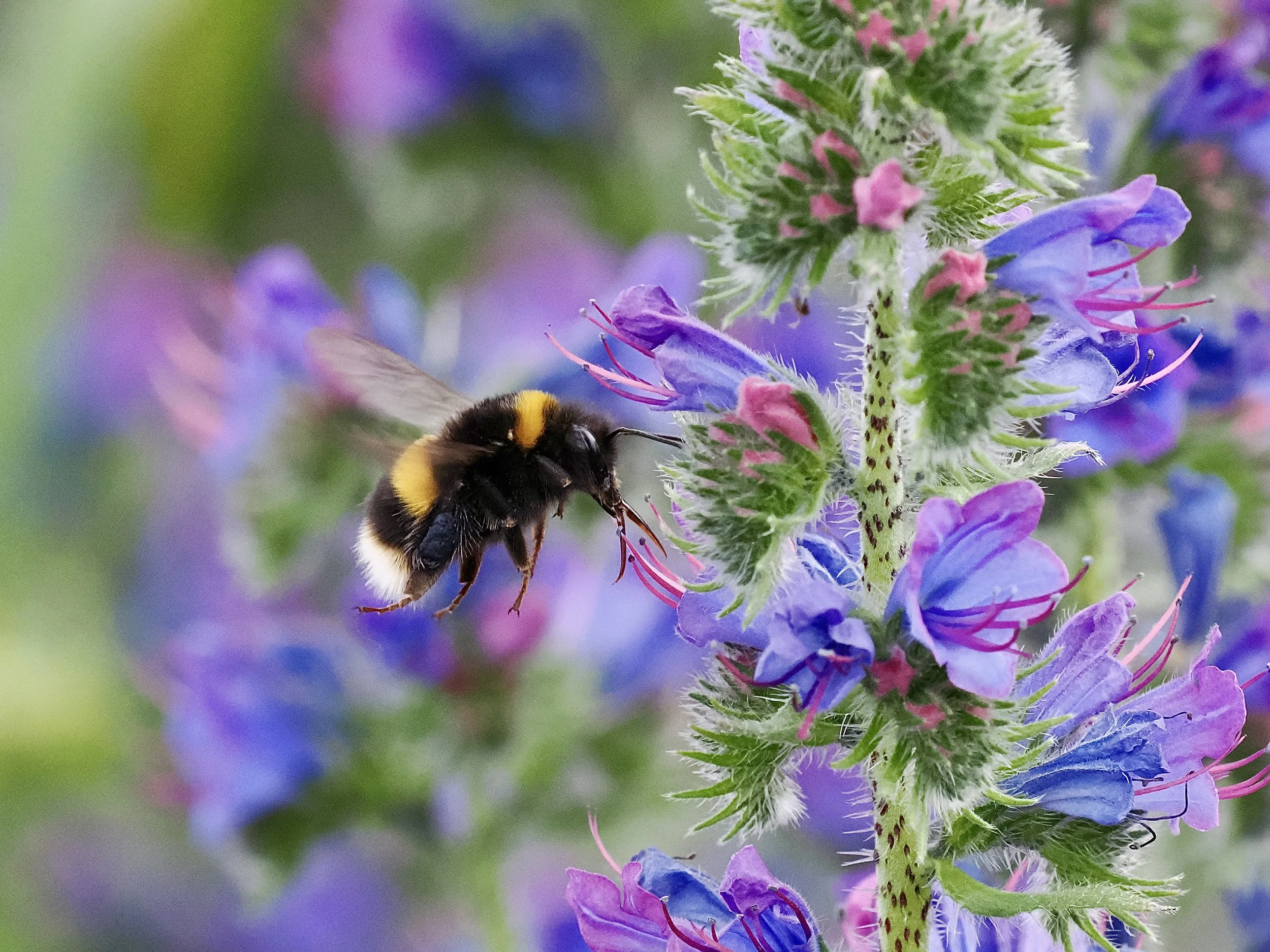
Litha is a celebration of abundance, vitality and the height of summer. It is a time to pause and appreciate the fullness of the season – the warmth, the flowers, the buzzing bees, the long evenings and everything mother earth has been nurturing since spring.
🌞 What is Litha?
Litha is one of the eight festivals that make up the Wheel of the Year. While Beltane celebrates possibility and new beginnings, Litha celebrates fulfilment. The seeds planted earlier in the year are flourishing, hedgerows are overflowing with life, and nature feels wonderfully abundant. Litha is celebrated to honour the sun's life giving energy and the thriving natural world.
Although from this day onward the daylight slowly begins to shorten, summer is far from over. Instead the solstice reminds us to savour the present moment before the seasons begin to turn again.
The name Litha itself isn't an ancient festival name but comes from the Old English month names recorded by the Anglo-Saxon scholar Bede in the 8th century. Modern pagan traditions later adopted it as the name for the Summer Solstice celebration.
Folklore & traditions
People have celebrated midsummer for thousands of years. Across Britain and Europe, communities gathered around great bonfires, believing the flames honoured the power of the sun and brought protection, health and prosperity for the months ahead. In some places, burning wheels were rolled down hills to symbolise the turning of the sun across the sky and the ever-turning wheel of the year.
Midsummer was also associated with herbs. Plants such as St John's Wort, mugwort and vervain were traditionally gathered at this time, as it was believed they held their greatest healing and protective qualities beneath the solstice sun.
Like Beltane, Litha has long been seen as a liminal time – a moment when the ordinary world and the world of folklore sit a little closer together. Tales of faeries, enchanted woods and magical encounters have become woven into midsummer traditions, perhaps most famously in Shakespeare's A Midsummer Night's Dream.
Whether taken literally or symbolically, these stories remind us to stay curious about the world around us.
Symbolism
Every seasonal festival carries its own imagery, and Litha is full of warmth and abundance.
Colours: Gold, yellow, white, deep green and warm amber.
Plants: Oak, St John's Wort, mugwort, vervain/verbena, roses and sunflowers.
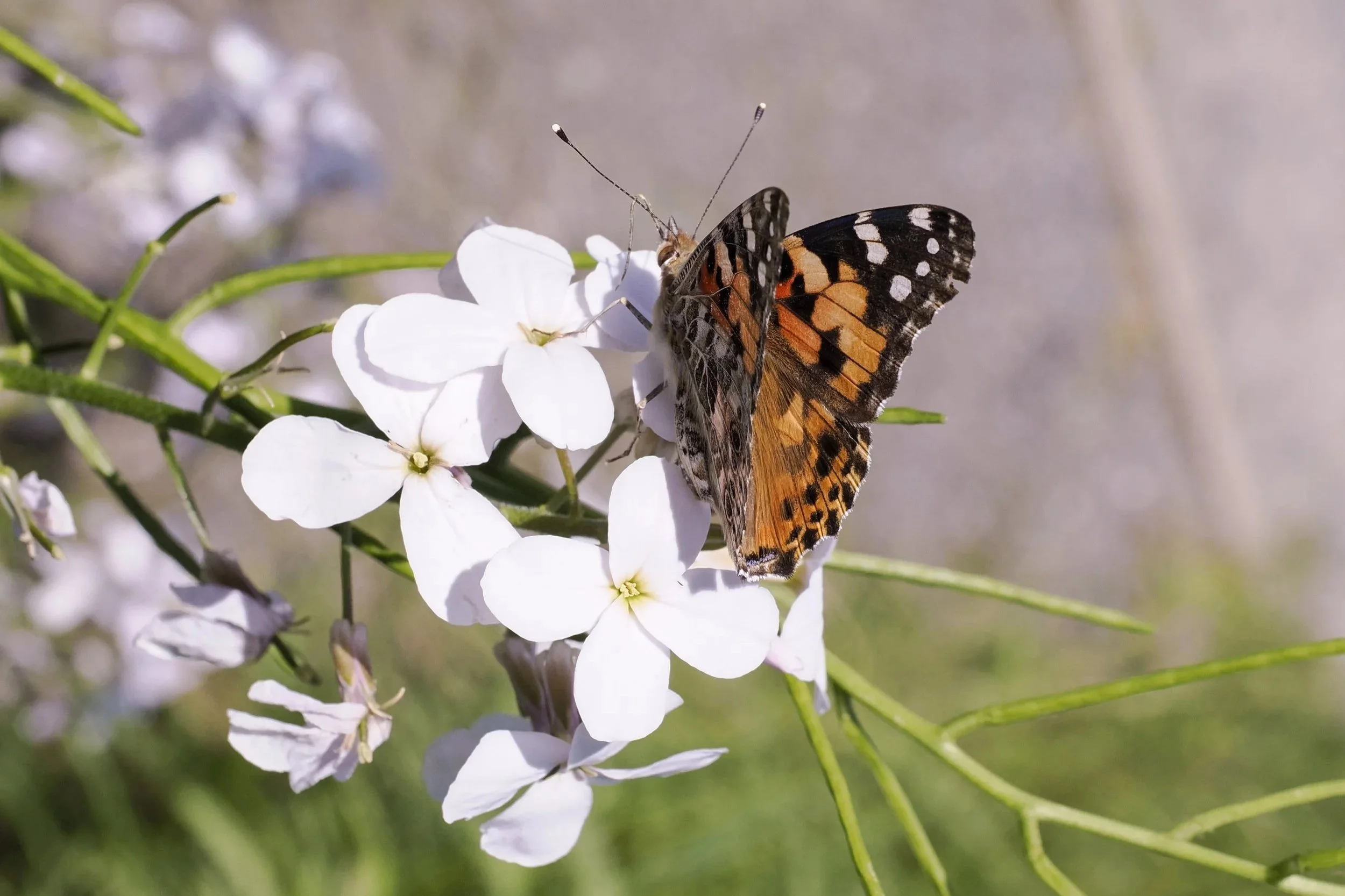
Animals: Bees, butterflies, dragonflies, and swallows.
Crystals: Citrine, sunstone, carnelian, amber and clear quartz.
Themes: Light. Joy. Vitality. Creativity. Gratitude. Abundance.
Ways to celebrate Litha
There is no right or wrong way to celebrate the Summer Solstice. I often find that sometimes the simplest traditions become the most meaningful.
You might like to:
Watch the sunrise or sunset.
Spend an evening reading in the garden or your favourite green space.
Light a candle to honour the longest day.
Gather wildflowers or herbs (being mindful to forage responsibly).
Make a flower crown.
Share a meal outdoors with family or friends.
Create something inspired by the season – paint, write, sketch or photograph.
Visit a woodland, meadow or ancient site and simply notice what is in bloom.
Take a short, slow walk without headphones and listen to the sounds of midsummer.
However you choose to spend the day, please let it be unhurried.
Go deeper
If you'd like to explore the season a little further, here are a few places you could begin.
📖 Read
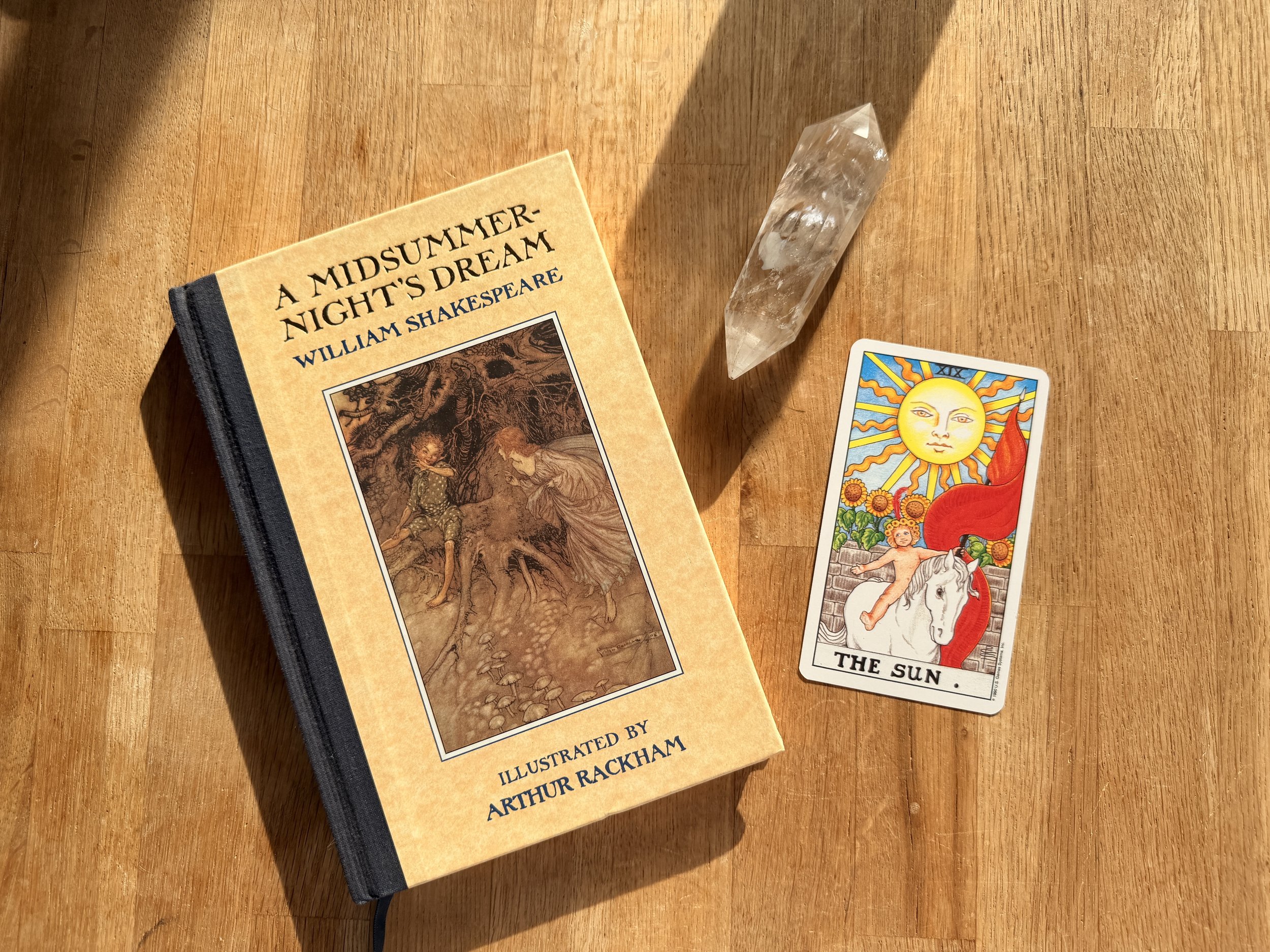
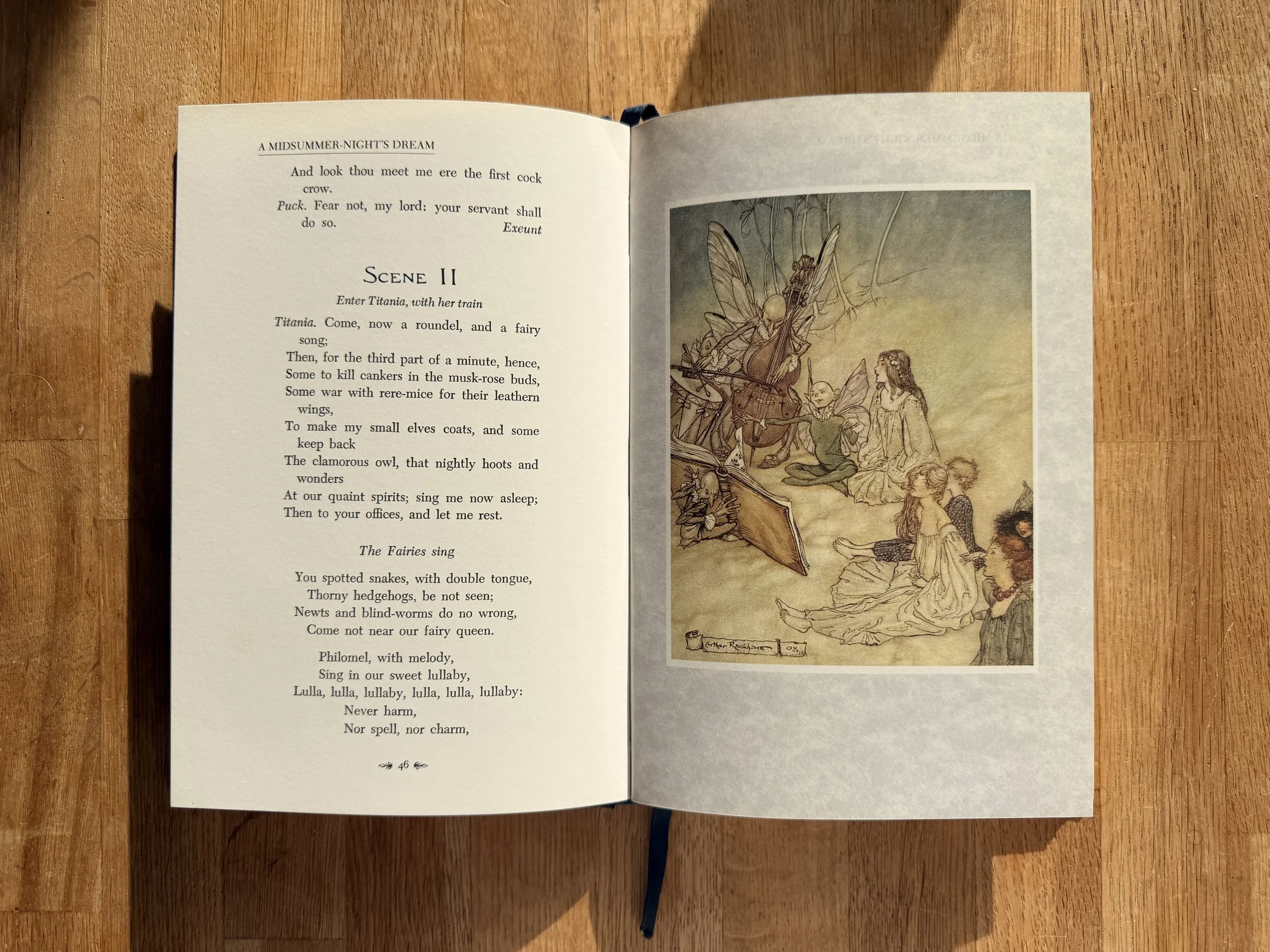
Read A Midsummer Night's Dream by Shakespeare. I re-read this every Summer Solstice, and it has become one of my favourite seasonal rituals. The edition pictured in this post is a vintage copy Craig surprised me with from the charity shops - it’s one of my favourite things.
Explore the folklore surrounding St John's Wort and the ancient traditions of midsummer herb gathering.
Learn about the significance of bonfires and sun wheels in European midsummer celebrations.
Research why thousands of people still gather at Stonehenge each Summer Solstice to watch the sunrise, and how this ancient monument continues to capture our imagination.
📜 Poem
Read Mary Oliver's The Sun or The Summer Day, a beautiful reminder to pay attention to the natural world and the fleeting beauty of the season.
🎧 Listen
Listen to Summer Girl by Haim and Solar Power by Lorde - a couple of my go-to’s.
📝 Journal prompt
What in my life is in full bloom right now? What have I nurtured that deserves to be acknowledged before I rush on to the next thing?
🃏 Tarot prompt
Pull a single card and ask:
Where is the light inviting me to pay attention?
Or...
What abundance have I been overlooking?
A final thought
One of the things I love most about following the Wheel of the Year is that it teaches us to notice.
The world is constantly changing, sometimes it feels frightening and rapid, but also often in ways so gradual we barely see them. The solstice extends an invitation to pause long enough to appreciate the season we're already in, rather than wishing for the next one.
Whether you mark Litha with a sunrise walk, a candle, a favourite book or simply a few deep breaths outdoors, I hope it encourages you to slow down and soak up the longest day of the year. This year I’ll be celebrating Litha with a well-thumbed copy of A Midsummer Night’s Dream and an evening walk along the river. The older I get, the more these small seasonal rituals become gentle anchors throughout the year.
Sending you blessings this Litha 💛